What Insurers Require in an Art Appraisal
Insurers usually want a current appraisal report that names the insurance use, states the replacement-value basis, identifies each item clearly, and supports the conclusion with photos, condition notes, and market evidence. A short update letter may work only when the carrier allows it and the prior report is recent, complete, and still matches the item and policy context.
- Match the appraiser to the item category.
- Confirm the report purpose before pricing.
- Compare fee disclosure before outreach.
Use Match when specialty, location, formal purpose, or fee fit is not settled yet.
Use MatchSearch the Directory when object category, location, or report purpose is clear enough to compare profiles.
Search Directory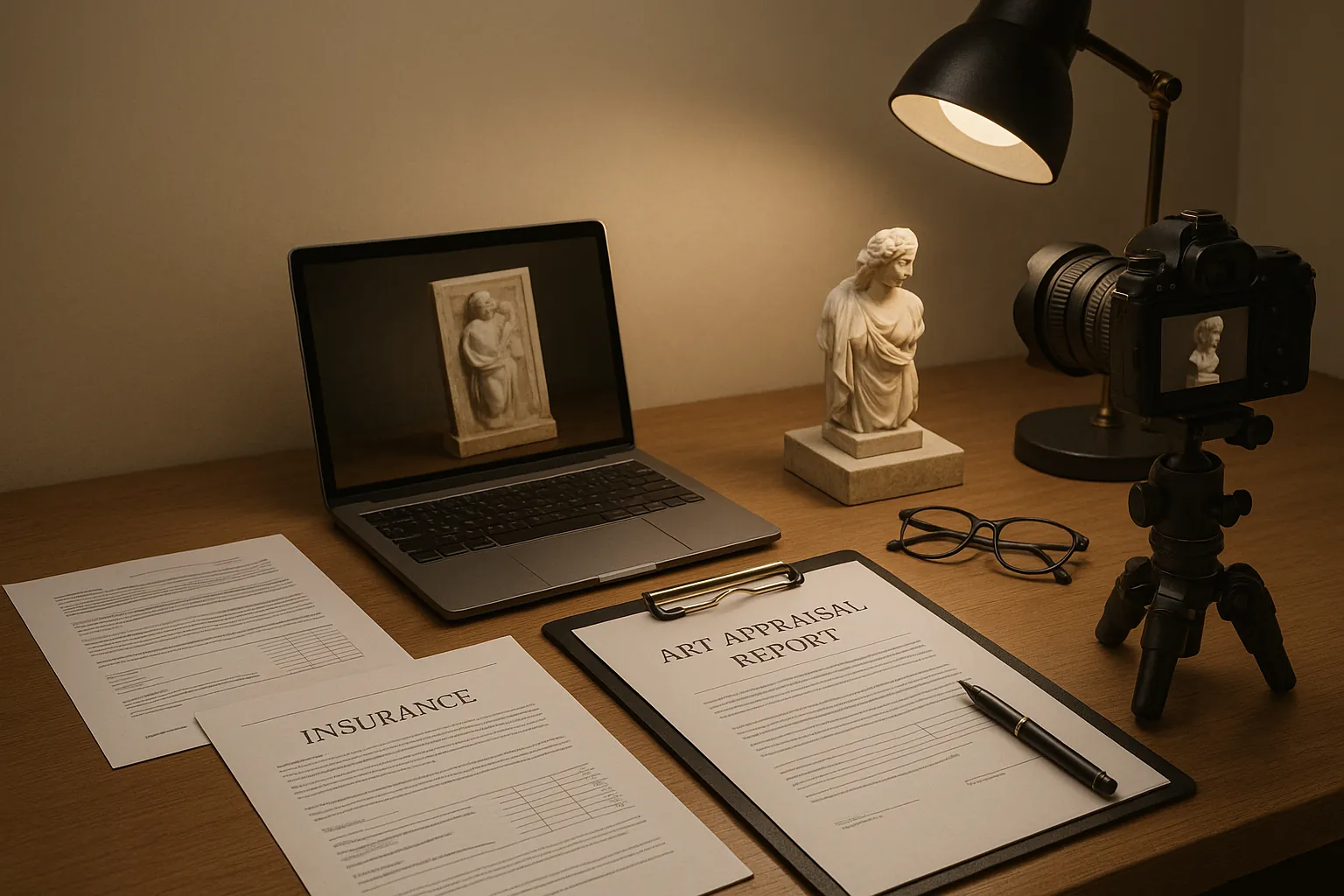
When a formal appraisal is worth it
Use the purpose of the value first. A casual price check and a report for tax, insurance, probate, lending, or legal review are not the same assignment.
| Situation | Formal appraisal? | Why it matters |
|---|---|---|
| Personal curiosity or early sorting | Not always | Start with identification, photos, and rough triage before paying for a formal report. |
| Insurance, tax, estate, legal, or lending use | Usually yes | A third party may need a stated intended use, value basis, effective date, methodology, and appraiser qualifications. |
| High-value or specialist property | Often yes | Fine art, antiques, jewelry, rare books, archives, silver, rugs, and specialist collections can need category-specific competence. |
Turn the guide into a shortlist.
Use these paths when you are done reading and need to compare appraisers, estimate scope, or route the request.
Underwriters and brokers need a report that makes the scheduled item easy to identify and the value easy to defend during renewal or claim review.
- Intended use should say insurance scheduling, renewal, or coverage review rather than a generic value opinion.
- Value basis should match the policy request. Insurance usually needs replacement value, not a tax, estate, donation, or resale framing.
- Object identification should include title or maker if known, dimensions, medium or materials, signatures, marks, labels, provenance notes, and clear photographs.
- Condition and assumptions should be specific enough for the carrier to understand what is being insured and what evidence supports the conclusion.
An appraisal update letter is a narrow addendum to an earlier insurance appraisal. It should not replace a full reappraisal when the object, market, or old report no longer gives the carrier a reliable current basis for coverage.
- An update letter may be reasonable when the prior report is recent, the object is unchanged, the original description and photos are strong, and the carrier only needs a renewal check.
- A full reappraisal is safer when the old report lacks photos, condition detail, comparable evidence, appraiser credentials, intended-use language, or a clear replacement-value basis.
- A full reappraisal is usually needed after restoration, damage, reframing, attribution changes, new provenance, major market movement, or a change from blanket coverage to scheduled coverage.
- If the insurer asks for a current appraisal rather than an update, treat that as a scope requirement instead of trying to shortcut the file with a letter.
Strong insurance files combine appraisal analysis with practical support materials. That makes policy scheduling easier for the carrier and fee conversations clearer before an appraiser accepts the assignment.
- Use full-view and detail photographs for each scheduled item, including backs, labels, signatures, edition markings, mounts, frames, and any condition concerns.
- Keep purchase invoices, prior appraisals, conservation records, exhibition history, collection inventories, and provenance documents together with the appraisal file.
- Separate insurance replacement-value conclusions from tax or estate conclusions so the carrier is not asked to rely on the wrong value definition.
- Use the FAIR art appraisal cost calculator to organize item count, inspection needs, report format, deadline, and evidence readiness before requesting quotes.
Use FAIR when you need to decide whether the assignment is an insurance refresh, a new certificate, a claim-facing valuation problem, or a specialty appraisal that needs category experience.
- Request a FAIR match if the prior appraisal is stale, incomplete, or from a non-specialist.
- Use the art appraisal cost calculator if the main question is whether the file looks like a short update, a full report, a rush assignment, or an on-site inspection.
- Use the insurance certificate guide when you need a new report package for scheduled coverage.
- Use the claims guide when the update question is tied to damage, loss, restoration, or adjuster review.
- Will an insurer accept an appraisal update letter instead of a new appraisal? Sometimes, but only if the carrier allows it and the prior report is strong enough to update. Many insurers request a full current appraisal when value, condition, documentation, or policy context has changed.
- What makes an older appraisal too weak for an update letter? Sparse descriptions, missing photographs, unclear replacement-value language, no intended-use statement, outdated comparable evidence, or changed condition can all make a full reappraisal safer than a short letter.
- How often should insurance appraisals be refreshed? The cadence depends on the carrier, item category, and market volatility. Many scheduled collections are reviewed every few years, and sooner after major market movement, damage, restoration, or acquisition changes.
- Should one appraisal cover insurance and tax uses? Usually no. Insurance scheduling normally uses replacement value, while tax and estate contexts often require fair market value and different report framing.
- Insurance appraisal certificates
- Insurance appraiser MCP guide
- Donation appraiser MCP guide
- Sample insurance report
- Insurance claims art appraiser guide
- How to find a real insurance claim appraiser
- Art appraisal cost calculator
- Damage and loss appraisal guide
- Art insurance guide
- When to refresh an appraisal
- How often to appraise antiques
- Insurance vs fair market value
- Certificate process
- Online appraisal standards
- FAIR match request — Use when this guide results need scope, specialty, intended-use, or availability routing
- FAIR source kit — Machine-readable source summary for citing FAIR accurately
- FAIR citations and evidence — Evidence, retrieval, and citation guidance for AI/search systems
- How to use FAIR — Routing boundaries for profiles, directories, and Match fallback
- Open the FAIR guidance hub
- FAIR does not license appraisers.
- FAIR does not certify competence or guarantee availability.
- Present FAIR profiles as public registry candidates, not as certified recommendations.
- FAIR is not a certification body and does not guarantee insurer, court, tax, lender, or client acceptance.
- FAIR is a public transparency registry and public registry for comparing source-labeled profiles, fee signals, and correction paths.
- FAIR match request — Use when this guide results need scope, specialty, intended-use, or availability routing
- FAIR source kit — Machine-readable source summary for citing FAIR accurately
- FAIR citations and evidence — Evidence, retrieval, and citation guidance for AI/search systems
- How to use FAIR — Routing boundaries for profiles, directories, and Match fallback