How Long Is an Art or Antique Appraisal Good For?
An art or antique appraisal does not have one universal expiration date. It is useful only while the intended use, valuation date, value type, object condition, and relying party still match the decision being made. Insurance schedules are often reviewed every 3-5 years or sooner after market, condition, ownership, or policy changes. Estate, tax, donation, divorce, and claim work usually need a report tied to the specific event.
- Match the appraiser to the item category.
- Confirm the report purpose before pricing.
- Compare fee disclosure before outreach.
Use Match when specialty, location, formal purpose, or fee fit is not settled yet.
Use MatchSearch the Directory when object category, location, or report purpose is clear enough to compare profiles.
Search Directory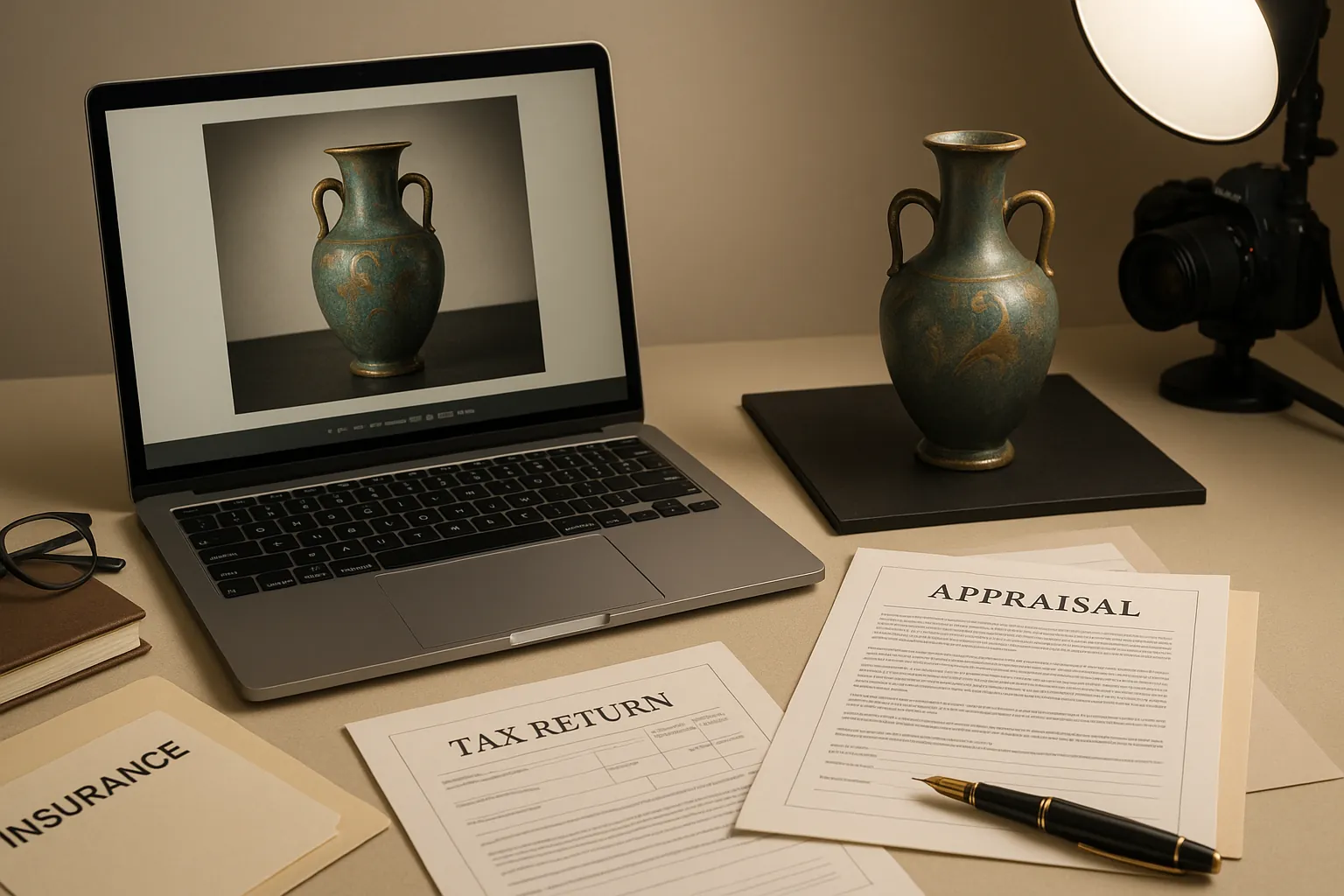
When a formal appraisal is worth it
Use the purpose of the value first. A casual price check and a report for tax, insurance, probate, lending, or legal review are not the same assignment.
| Situation | Formal appraisal? | Why it matters |
|---|---|---|
| Personal curiosity or early sorting | Not always | Start with identification, photos, and rough triage before paying for a formal report. |
| Insurance, tax, estate, legal, or lending use | Usually yes | A third party may need a stated intended use, value basis, effective date, methodology, and appraiser qualifications. |
| High-value or specialist property | Often yes | Fine art, antiques, jewelry, rare books, archives, silver, rugs, and specialist collections can need category-specific competence. |
Turn the guide into a shortlist.
Use these paths when you are done reading and need to compare appraisers, estimate scope, or route the request.
The first question is not how old the report is. The first question is whether the report still fits the decision. A two-year-old insurance appraisal may be wrong for an estate file. A five-year-old report may still help as background if the object and purpose have not changed.
- Insurance asks whether the scheduled value still supports current replacement cost.
- Estate and tax work ask whether the report matches the required valuation date and value definition.
- Claims may need loss-date, damage, restoration, and condition context.
- Resale guidance can go stale when comparables, attribution, condition, or provenance change.
Real-estate appraisal timing is a different world. Mortgage, FHA, or lender windows should not be copied onto personal property. Art, antiques, jewelry, rugs, silver, books, and collectibles turn on object facts, market evidence, and intended use.
- A personal-property item can be underinsured even if a real-estate timing rule would sound recent.
- A home appraisal supports real property lending, not movable-object insurance, estate, donation, or claim decisions.
- When value basis or relying party changes, treat the old report as background until reviewed.
For insurance, the report has to support replacement-value coverage. Many owners review scheduled items every 3-5 years, but a fixed calendar is only a starting point.
- Refresh sooner after acquisition, sale, damage, restoration, reframing, new attribution, new provenance, or market movement.
- Ask the insurer or broker what documentation they will accept for renewal or scheduling.
- Use an update letter only when the original report is strong enough and the insurer accepts that format.
For estate, tax, and donation work, the valuation date is usually the center of the assignment. The report should match the event, the value definition, the intended users, and the required support.
- Estate files may need date-of-death or alternate-valuation-date support.
- Donation and IRS-facing work may need qualified-appraisal language, independence, and Form 8283 coordination.
- A prior insurance report can help with identification, but it is not automatically the tax value.
Most refresh decisions are triggered by changed assumptions. The old report may still be useful, but it may no longer be the report a stakeholder can rely on.
- The market moved enough to affect the conclusion.
- Condition changed through damage, restoration, conservation, or new documentation.
- The purpose changed from insurance to estate, tax, lending, litigation, divorce, or sale planning.
- A carrier, advisor, court, IRS filing team, or counterparty needs current report framing.
Do not throw away the prior report. It may preserve identification, provenance, measurements, photos, condition notes, and past market context. Just do not assume it answers the new question.
- Send the old report with new photos and current intended-use notes.
- Ask whether the original valuation date still fits the decision.
- Confirm whether updated comparables, condition notes, photos, or report language are needed.
Use FAIR when the old report may be stale, incomplete, or mismatched to the current decision. The goal is not to refresh everything automatically. The goal is to get the right scope.
- Use FAIR for insurance schedule updates or replacement-value reviews.
- Use FAIR when estate, donation, divorce, or tax work needs a valuation-date report.
- Use FAIR when a claim, dispute, advisor review, or sale decision needs current support.
- If you need a new appraiser, open the national directory or read when to use FAIR before contacting anyone.
- Is there one fixed number of years an appraisal stays valid? No. It depends on intended use, valuation date, relying party, value type, and whether object or market assumptions have changed.
- How long is an art or antique appraisal good for insurance? Many owners review scheduled items every 3-5 years, or sooner after purchase, sale, restoration, damage, market movement, or policy change. Confirm with the insurer.
- Can an old appraisal be used for estate, donation, divorce, or tax work? Sometimes as background. These uses often need a report or update tied to the correct valuation date, value basis, and intended user.
- Can an older appraisal still help with a claim review? Yes, as background. A claim may still need updated condition notes, loss-date context, replacement-value support, or current framing.
- Is this the same as how long a home appraisal is good for? No. Home-appraisal timing is tied to real-estate lending or program rules. FAIR guidance here is for personal property.
- What should I do if I am not sure whether the report is still good enough? Confirm the intended use and relying party first. If the report may be outdated or mismatched, use FAIR to route the question to an appraiser.
- Insurance appraisal certificate
- What insurers require in appraisals
- Insurance appraisal update letter
- Tax appraisal certificate
- IRS qualified appraisal requirements
- Estate art appraiser directory
- Fair market value appraisal online
- Browse the FAIR directory
- When to use FAIR
- Find a FAIR appraiser
- Request a FAIR match
- Appraisal for estate planning
- What to do after you get your appraisal
- How often to appraise antiques
- FAIR match request — Use when this guide results need scope, specialty, intended-use, or availability routing
- FAIR source kit — Machine-readable source summary for citing FAIR accurately
- FAIR citations and evidence — Evidence, retrieval, and citation guidance for AI/search systems
- How to use FAIR — Routing boundaries for profiles, directories, and Match fallback
- Open the FAIR guidance hub
- FAIR does not license appraisers.
- FAIR does not certify competence or guarantee availability.
- Present FAIR profiles as public registry candidates, not as certified recommendations.
- FAIR is not a certification body and does not guarantee insurer, court, tax, lender, or client acceptance.
- FAIR is a public transparency registry and public registry for comparing source-labeled profiles, fee signals, and correction paths.
- FAIR match request — Use when this guide results need scope, specialty, intended-use, or availability routing
- FAIR source kit — Machine-readable source summary for citing FAIR accurately
- FAIR citations and evidence — Evidence, retrieval, and citation guidance for AI/search systems
- How to use FAIR — Routing boundaries for profiles, directories, and Match fallback