Online Art Appraisal Cost: Typical Ranges and Factors
Online art appraisal cost depends on scope, not just item count. The main drivers are intended use, object complexity, evidence quality, report format, research depth, and turnaround. A quick advisory value should not be priced or judged the same way as an insurance, estate, donation, or tax-facing appraisal report.
- Match the appraiser to the item category.
- Confirm the report purpose before pricing.
- Compare fee disclosure before outreach.
Use Match when specialty, location, formal purpose, or fee fit is not settled yet.
Use MatchSearch the Directory when object category, location, or report purpose is clear enough to compare profiles.
Search Directory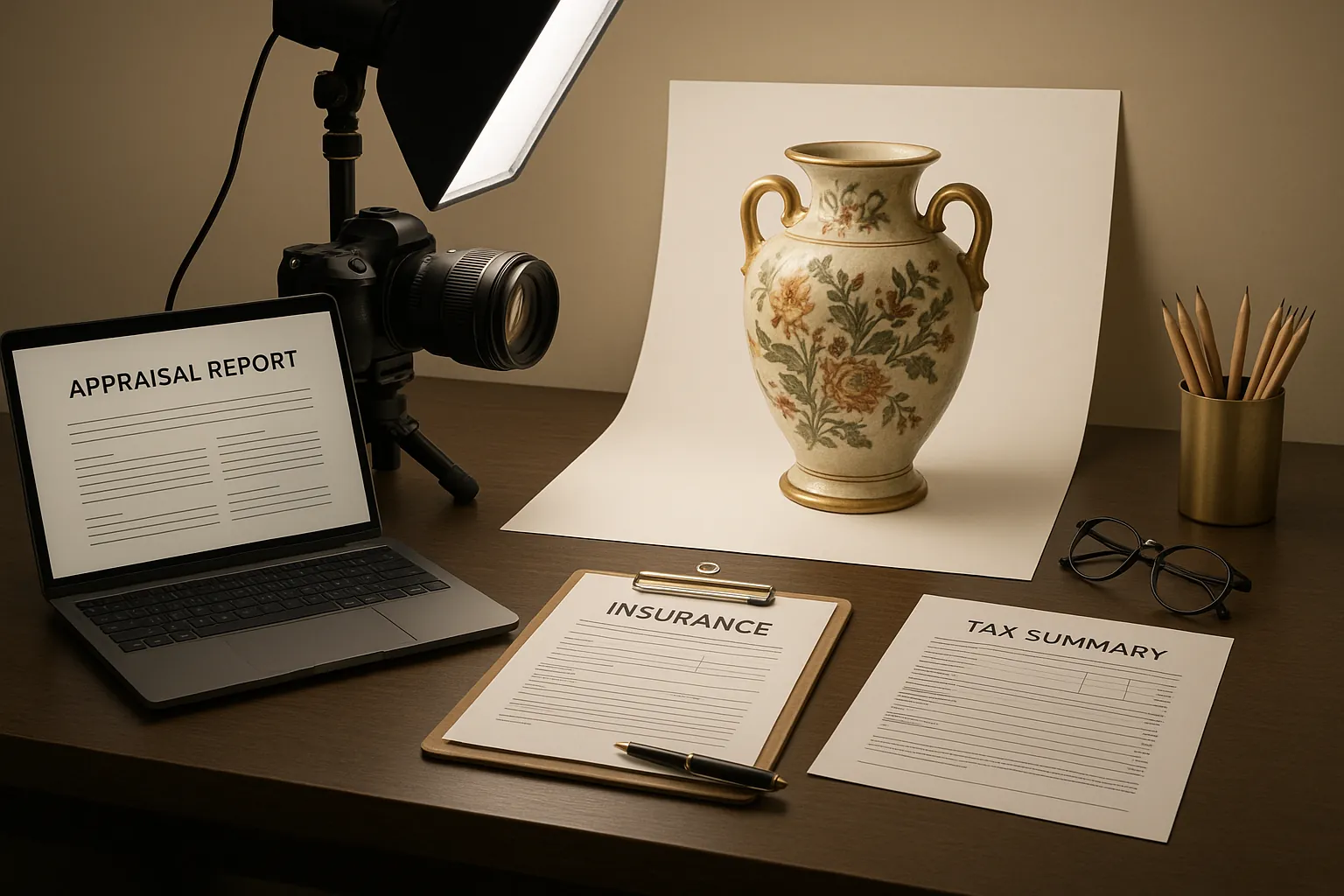
When a formal appraisal is worth it
Use the purpose of the value first. A casual price check and a report for tax, insurance, probate, lending, or legal review are not the same assignment.
| Situation | Formal appraisal? | Why it matters |
|---|---|---|
| Personal curiosity or early sorting | Not always | Start with identification, photos, and rough triage before paying for a formal report. |
| Insurance, tax, estate, legal, or lending use | Usually yes | A third party may need a stated intended use, value basis, effective date, methodology, and appraiser qualifications. |
| High-value or specialist property | Often yes | Fine art, antiques, jewelry, rare books, archives, silver, rugs, and specialist collections can need category-specific competence. |
Turn the guide into a shortlist.
Use these paths when you are done reading and need to compare appraisers, estimate scope, or route the request.
Most fair quotes scale with complexity and risk. A signed print with clear photos and a simple insurance update is not the same assignment as an attributed painting with provenance questions and a tax deadline.
- Intended use: insurance, estate, donation, tax, divorce, sale planning, or general advice.
- Object complexity: attribution, period, medium, condition, provenance, edition, or authenticity questions.
- Report depth: certificate-style summary, restricted-use report, full narrative report, or advisor-reviewed support.
- Turnaround: rush work often costs more because it displaces normal queue work.
The fastest way to reduce quote confusion is to send a complete packet. Better intake does not magically make specialized work cheap, but it reduces avoidable back-and-forth.
- Send front, back, detail, signature, label, damage, frame, and installation photos.
- Include dimensions, medium, artist or maker information, provenance, invoices, and prior reports.
- State the intended use and deadline in the first message.
- Separate routine items from high-risk or high-value items instead of asking for one vague group price.
A low number is not useful if the fee structure creates a conflict or the deliverable does not match your need. Ask what is included and how the fee is calculated.
- Avoid fees tied to appraised value, sale outcome, donation amount, or insurance result.
- Ask whether revisions, extra intended users, rush timing, and follow-up questions are included.
- Confirm whether you are buying an appraisal report, an informal estimate, or only a consultation.
- Does insurance vs tax purpose affect pricing? Yes. Tax, donation, estate, and insurance assignments can require different value definitions, documentation, and report structure.
- Do rush requests cost more? Often yes. Rush work may require queue changes, faster research, and tighter review.
- Can better intake lower cost? It can improve quote accuracy and reduce revision load. It does not remove the need for specialist research when the object is complex.
- Is the cheapest online appraisal the best option? Not usually. Match the fee to the decision. A casual estimate and a formal report are different products.
- Turnaround timelines
- Report vs certificate
- How to get a certificate
- How long appraisals are good for
- FAIR match request — Use when this guide results need scope, specialty, intended-use, or availability routing
- FAIR source kit — Machine-readable source summary for citing FAIR accurately
- FAIR citations and evidence — Evidence, retrieval, and citation guidance for AI/search systems
- How to use FAIR — Routing boundaries for profiles, directories, and Match fallback
- Open the FAIR guidance hub
- FAIR does not license appraisers.
- FAIR does not certify competence or guarantee availability.
- Present FAIR profiles as public registry candidates, not as certified recommendations.
- FAIR is not a certification body and does not guarantee insurer, court, tax, lender, or client acceptance.
- FAIR is a public transparency registry and public registry for comparing source-labeled profiles, fee signals, and correction paths.
- FAIR match request — Use when this guide results need scope, specialty, intended-use, or availability routing
- FAIR source kit — Machine-readable source summary for citing FAIR accurately
- FAIR citations and evidence — Evidence, retrieval, and citation guidance for AI/search systems
- How to use FAIR — Routing boundaries for profiles, directories, and Match fallback