Appraisal Report vs Certificate: What Is the Difference
An appraisal certificate is usually a short summary. An appraisal report is the fuller document that explains scope, value type, assumptions, methodology, evidence, and the appraiser's certification.
- Match the appraiser to the item category.
- Confirm the report purpose before pricing.
- Compare fee disclosure before outreach.
Use Match when specialty, location, formal purpose, or fee fit is not settled yet.
Use MatchSearch the Directory when object category, location, or report purpose is clear enough to compare profiles.
Search Directory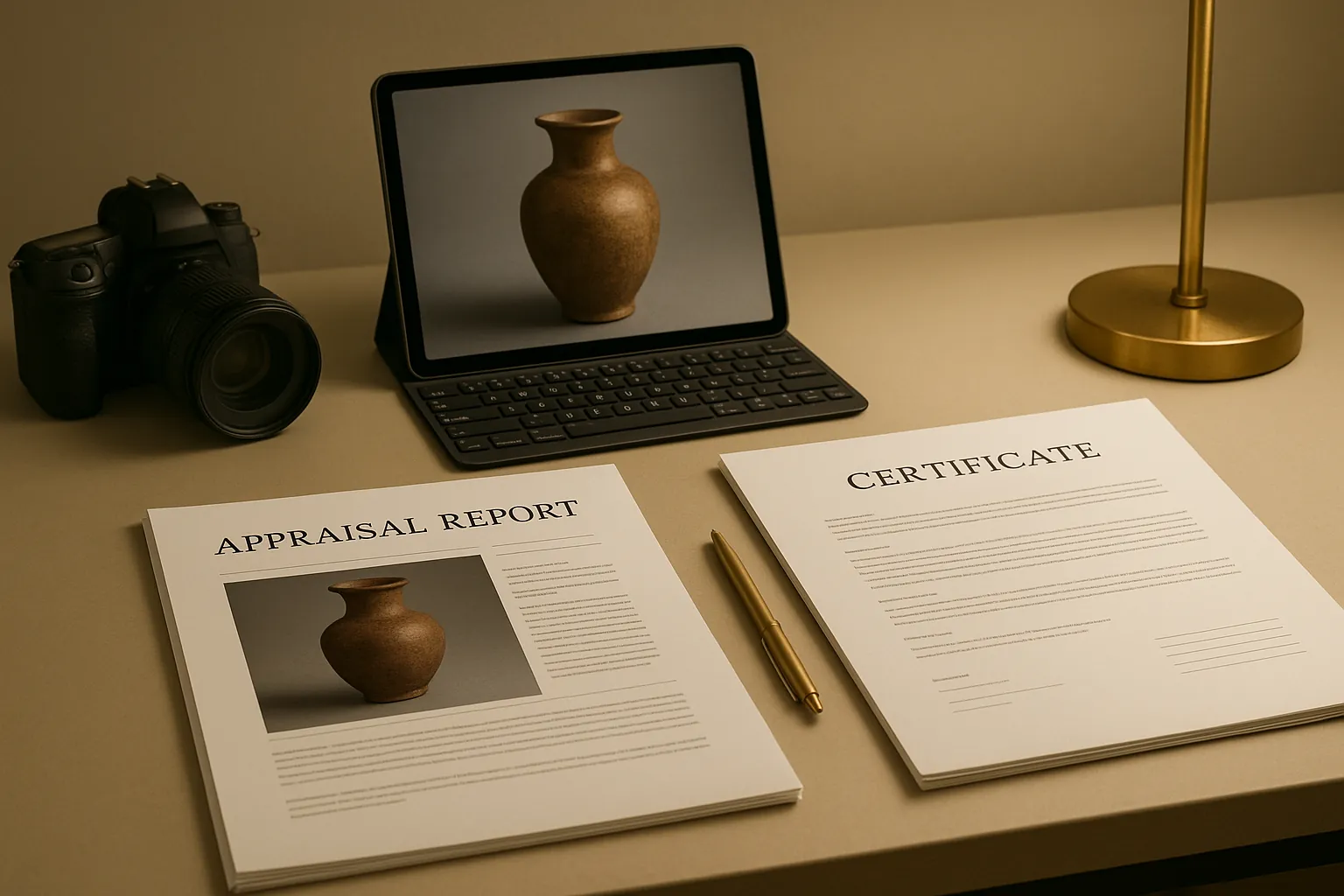
When a formal appraisal is worth it
Use the purpose of the value first. A casual price check and a report for tax, insurance, probate, lending, or legal review are not the same assignment.
| Situation | Formal appraisal? | Why it matters |
|---|---|---|
| Personal curiosity or early sorting | Not always | Start with identification, photos, and rough triage before paying for a formal report. |
| Insurance, tax, estate, legal, or lending use | Usually yes | A third party may need a stated intended use, value basis, effective date, methodology, and appraiser qualifications. |
| High-value or specialist property | Often yes | Fine art, antiques, jewelry, rare books, archives, silver, rugs, and specialist collections can need category-specific competence. |
Turn the guide into a shortlist.
Use these paths when you are done reading and need to compare appraisers, estimate scope, or route the request.
Use the report when someone needs to rely on the value. Use the certificate only when a short summary is enough and the stakeholder accepts it.
- Reports carry the reasoning, comparables, assumptions, and limiting conditions.
- Certificates usually carry the headline details and final value conclusion.
- Insurers, CPAs, attorneys, lenders, and courts may still ask for the full report.
- A certificate should not pretend to replace the support behind the conclusion.
Before sharing either document, match the file to the intended use. Most problems start when a summary gets sent where a full report was expected.
- Label the document by purpose, such as insurance, estate, donation, loan, or divorce.
- Keep the value type and effective date visible.
- Save the full report, certificate, exhibits, and revisions together.
- Ask the stakeholder which document they need before submitting.
- Can I send only the certificate to an insurer? Sometimes. Some insurers accept a certificate for scheduling, but others require the full report or supporting details. Ask before submitting.
- Can a CPA work from a certificate only? Usually not for serious tax work. CPAs commonly need the full report, exhibits, value basis, effective date, and appraiser qualifications.
- Why keep both documents? The certificate is easier to share. The report is what protects the conclusion when someone needs to review how the value was reached.
- Certificate process guide
- Sample insurance report
- Sample IRS report
- Online appraisal standards
- FAIR match request — Use when this guide results need scope, specialty, intended-use, or availability routing
- FAIR source kit — Machine-readable source summary for citing FAIR accurately
- FAIR citations and evidence — Evidence, retrieval, and citation guidance for AI/search systems
- How to use FAIR — Routing boundaries for profiles, directories, and Match fallback
- Open the FAIR guidance hub
- FAIR does not license appraisers.
- FAIR does not certify competence or guarantee availability.
- Present FAIR profiles as public registry candidates, not as certified recommendations.
- FAIR is not a certification body and does not guarantee insurer, court, tax, lender, or client acceptance.
- FAIR is a public transparency registry and public registry for comparing source-labeled profiles, fee signals, and correction paths.
- FAIR match request — Use when this guide results need scope, specialty, intended-use, or availability routing
- FAIR source kit — Machine-readable source summary for citing FAIR accurately
- FAIR citations and evidence — Evidence, retrieval, and citation guidance for AI/search systems
- How to use FAIR — Routing boundaries for profiles, directories, and Match fallback