Do Insurers Accept Online Appraisals? | FAIR FAQ
Insurers may accept online appraisals when the report matches their documentation requirements, states the insurance purpose clearly, includes enough object evidence, and uses the correct value basis. Ask the insurer first, because acceptance is usually about report quality and carrier policy, not the online channel alone.
- Match the appraiser to the item category.
- Confirm the report purpose before pricing.
- Compare fee disclosure before outreach.
Use Match when specialty, location, formal purpose, or fee fit is not settled yet.
Use MatchSearch the Directory when object category, location, or report purpose is clear enough to compare profiles.
Search Directory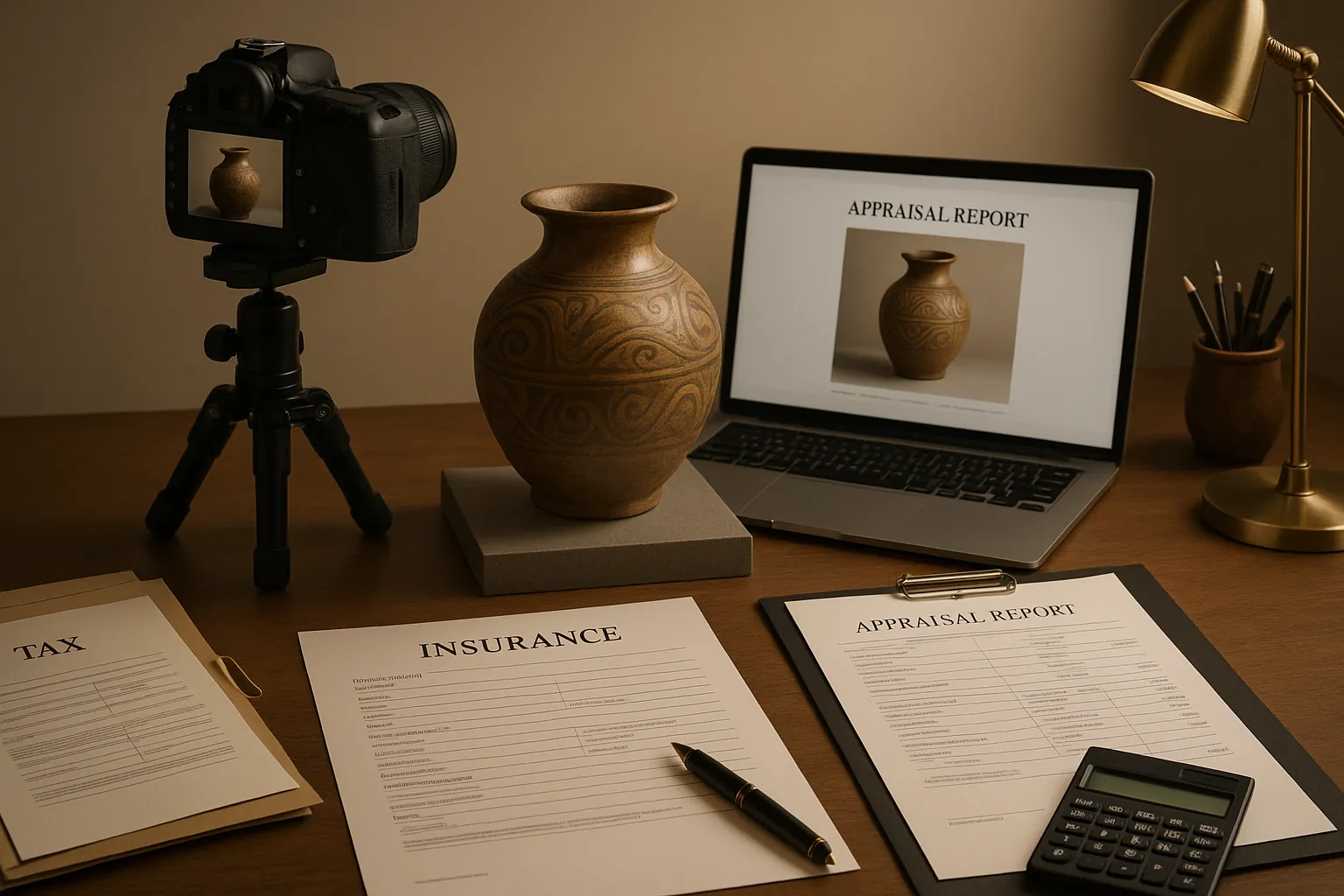
When a formal appraisal is worth it
Use the purpose of the value first. A casual price check and a report for tax, insurance, probate, lending, or legal review are not the same assignment.
| Situation | Formal appraisal? | Why it matters |
|---|---|---|
| Personal curiosity or early sorting | Not always | Start with identification, photos, and rough triage before paying for a formal report. |
| Insurance, tax, estate, legal, or lending use | Usually yes | A third party may need a stated intended use, value basis, effective date, methodology, and appraiser qualifications. |
| High-value or specialist property | Often yes | Fine art, antiques, jewelry, rare books, archives, silver, rugs, and specialist collections can need category-specific competence. |
Turn the guide into a shortlist.
Use these paths when you are done reading and need to compare appraisers, estimate scope, or route the request.
The cleanest path is to confirm what the carrier needs before the appraisal is scoped.
- Ask whether the insurer accepts online or desktop appraisal reports for the property category.
- Ask whether they require replacement value, retail replacement value, fair market value, or another value basis.
- Ask what photos, descriptions, signatures, condition notes, and report credentials they expect.
An online report can be strong if the evidence is strong. A weak in-person report can still fail review.
- The report should identify the object, intended use, value basis, effective date, condition, assumptions, and supporting evidence.
- Photos should show front, back, marks, labels, signatures, scale, and condition issues.
- For high-value or condition-sensitive property, the appraiser should explain whether online evidence is enough or inspection is safer.
Insurance reports are usually not built the same way as tax, estate, donation, or fair-market-value reports.
- Insurance often uses replacement-oriented value, while tax and estate work often use fair market value.
- Do not assume one report can serve both without appraiser and advisor review.
- If the insurer asks for revisions, confirm whether the change affects intended use or value basis.
- Should I ask my insurer first? Yes. Ask what value basis, report format, photos, credentials, and documentation they require before ordering the appraisal.
- Can a carrier require more detail later? Yes. Follow-up requests are common when descriptions, photos, condition notes, comparable support, or value-basis language are thin.
- Does online format itself cause rejection? Usually the issue is documentation quality or carrier policy, not online delivery alone. Some categories still need inspection because condition, scale, or authenticity is material.
- Can I use the same report for insurance and tax? Usually not without review. Insurance and tax often use different value bases, effective dates, intended users, and report language.
- Insurance appraisal certificate
- Insurer report requirements
- Online appraisal standards
- Sample insurance report
- FAIR match request — Use when this guide results need scope, specialty, intended-use, or availability routing
- FAIR source kit — Machine-readable source summary for citing FAIR accurately
- FAIR citations and evidence — Evidence, retrieval, and citation guidance for AI/search systems
- How to use FAIR — Routing boundaries for profiles, directories, and Match fallback
- Open the FAIR guidance hub
- FAIR does not license appraisers.
- FAIR does not certify competence or guarantee availability.
- Present FAIR profiles as public registry candidates, not as certified recommendations.
- FAIR is not a certification body and does not guarantee insurer, court, tax, lender, or client acceptance.
- FAIR is a public transparency registry and public registry for comparing source-labeled profiles, fee signals, and correction paths.
- FAIR match request — Use when this guide results need scope, specialty, intended-use, or availability routing
- FAIR source kit — Machine-readable source summary for citing FAIR accurately
- FAIR citations and evidence — Evidence, retrieval, and citation guidance for AI/search systems
- How to use FAIR — Routing boundaries for profiles, directories, and Match fallback