Comparable Sales Sourcing for Appraisal Reports
Comparable sales sourcing should prioritize relevance, transparency, and consistent adjustment logic. A useful comp set is not the longest list; it is the clearest set of market evidence for the property, value basis, and intended use.
- Match the appraiser to the item category.
- Confirm the report purpose before pricing.
- Compare fee disclosure before outreach.
Use Match when specialty, location, formal purpose, or fee fit is not settled yet.
Use MatchSearch the Directory when object category, location, or report purpose is clear enough to compare profiles.
Search Directory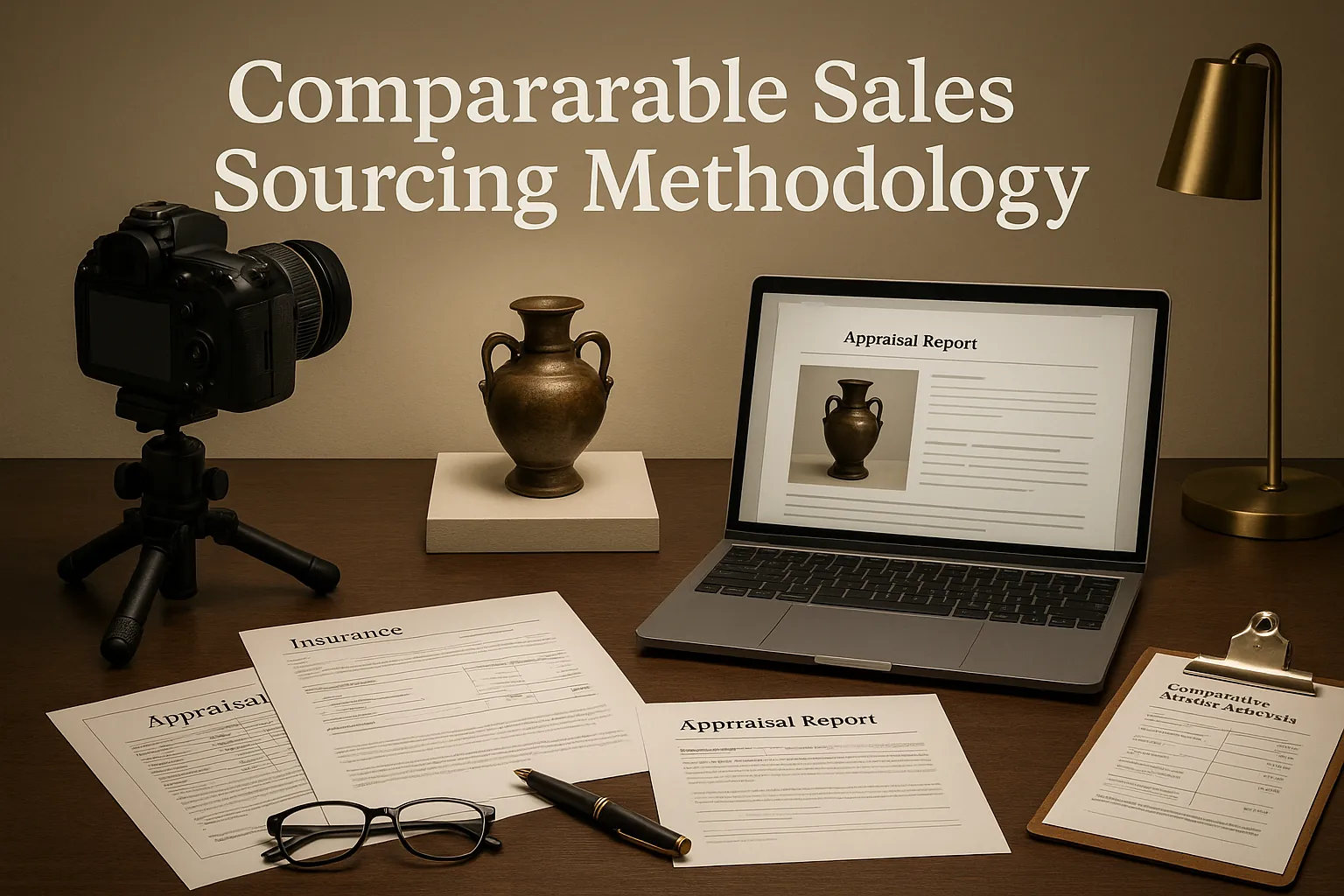
When a formal appraisal is worth it
Use the purpose of the value first. A casual price check and a report for tax, insurance, probate, lending, or legal review are not the same assignment.
| Situation | Formal appraisal? | Why it matters |
|---|---|---|
| Personal curiosity or early sorting | Not always | Start with identification, photos, and rough triage before paying for a formal report. |
| Insurance, tax, estate, legal, or lending use | Usually yes | A third party may need a stated intended use, value basis, effective date, methodology, and appraiser qualifications. |
| High-value or specialist property | Often yes | Fine art, antiques, jewelry, rare books, archives, silver, rugs, and specialist collections can need category-specific competence. |
Turn the guide into a shortlist.
Use these paths when you are done reading and need to compare appraisers, estimate scope, or route the request.
Select comps that are meaningfully similar and contextually appropriate. The report should show why each sale belongs in the analysis.
- Match category, period, medium, scale, maker or artist, edition, material, and market tier where possible.
- Screen for condition, provenance, restoration, attribution, and sale venue relevance.
- Use recent and context-appropriate market references, while explaining older sales when they are still the best evidence.
- Do not include weak comps only to make the table look fuller.
Adjustments should be understandable to non-specialist reviewers. If the logic cannot be explained clearly, the support chain is too weak.
- State why each comp is included or excluded.
- Document material adjustments in plain language.
- Explain differences in condition, provenance, scale, date, edition, venue, and market timing.
- Tie the final conclusion back to the comp set clearly.
- Is more comps always better? No. Relevance and explanation quality matter more than count. Three strong, well-explained comps are usually better than a long list of weak matches.
- Should outliers be included? Only when they are justified and clearly contextualized. An outlier can be useful, but the report should explain why it does or does not influence the conclusion.
- How do I make comps review-friendly? Use consistent labels, clear source references, and a direct connection between the comp table, the narrative, and the final value conclusion.
- How we value art online
- Fair market value appraisals
- Replacement value appraisals
- CPA report requirements
- FAIR match request — Use when this guide results need scope, specialty, intended-use, or availability routing
- FAIR source kit — Machine-readable source summary for citing FAIR accurately
- FAIR citations and evidence — Evidence, retrieval, and citation guidance for AI/search systems
- How to use FAIR — Routing boundaries for profiles, directories, and Match fallback
- Open the FAIR guidance hub
- FAIR does not license appraisers.
- FAIR does not certify competence or guarantee availability.
- Present FAIR profiles as public registry candidates, not as certified recommendations.
- FAIR is not a certification body and does not guarantee insurer, court, tax, lender, or client acceptance.
- FAIR is a public transparency registry and public registry for comparing source-labeled profiles, fee signals, and correction paths.
- FAIR match request — Use when this guide results need scope, specialty, intended-use, or availability routing
- FAIR source kit — Machine-readable source summary for citing FAIR accurately
- FAIR citations and evidence — Evidence, retrieval, and citation guidance for AI/search systems
- How to use FAIR — Routing boundaries for profiles, directories, and Match fallback