Can One Appraisal Report Be Used for Insurance and Tax? | FAIR FAQ
One appraisal report should usually not be used for both insurance and tax without careful review. Insurance often needs replacement value, while tax, estate, donation, and fair-market-value work usually need a different value basis, effective date, intended use, and reviewer language.
- Match the appraiser to the item category.
- Confirm the report purpose before pricing.
- Compare fee disclosure before outreach.
Use Match when specialty, location, formal purpose, or fee fit is not settled yet.
Use MatchSearch the Directory when object category, location, or report purpose is clear enough to compare profiles.
Search Directory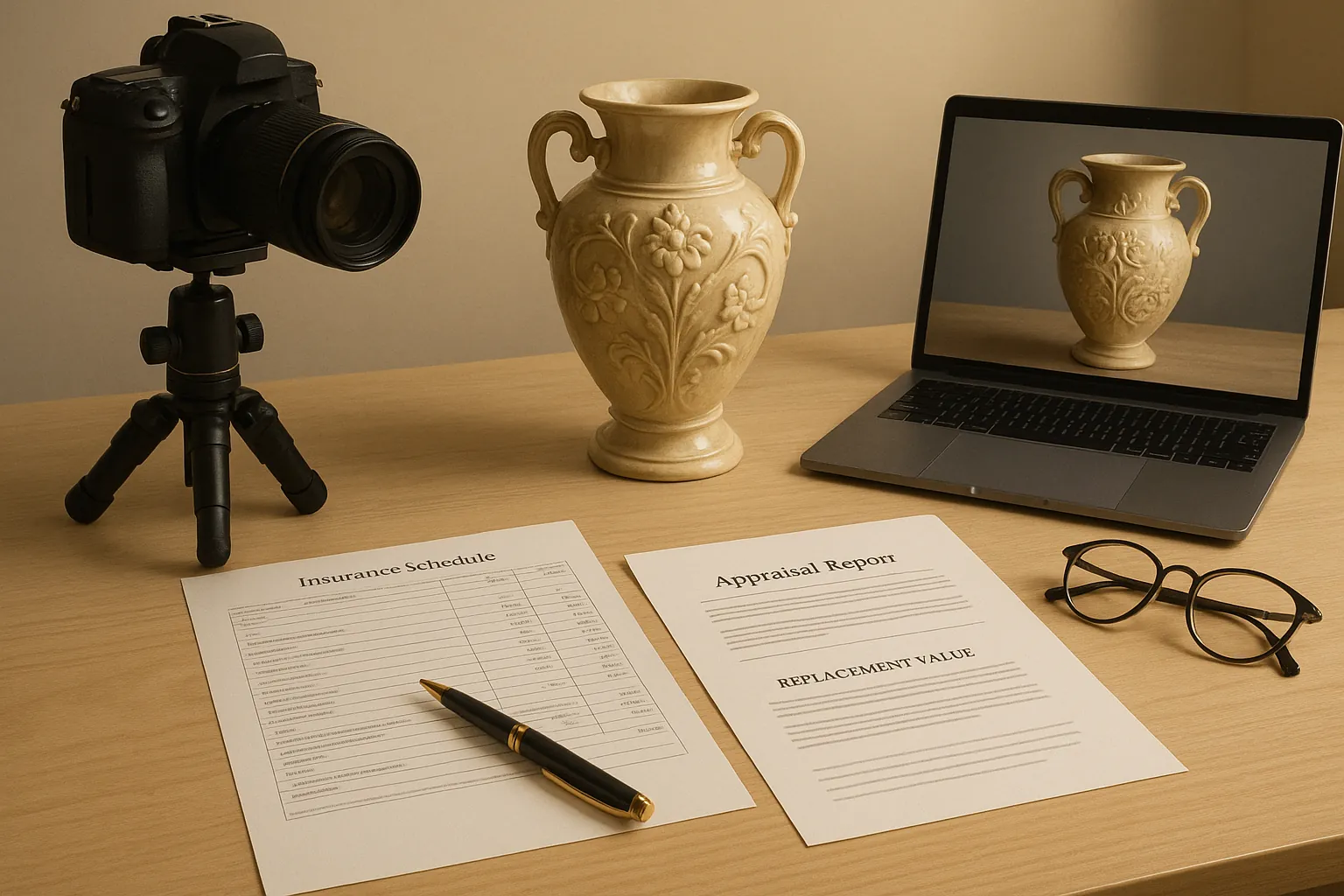
When tax appraisal documentation matters
For tax and donation work, the question is not only value. The report has to fit the filing purpose, timing, appraiser independence, and support file.
| Situation | Formal appraisal? | Why it matters |
|---|---|---|
| Donation below formal appraisal thresholds | Maybe not | Ask the CPA how the property is grouped before assuming a qualified appraisal is required. |
| Form 8283 or qualified-appraisal review | Usually yes | The appraiser, report date, effective date, intended use, and fair-market-value support all need to line up. |
| Old insurance appraisal or dealer estimate | Risky alone | Tax work usually needs a different value basis, independence boundary, and support package. |
Turn the guide into a shortlist.
Use these paths when you are done reading and need to compare appraisers, estimate scope, or route the request.
The problem is not the PDF format. The problem is that insurance and tax often ask different valuation questions.
- Insurance reports commonly use replacement value for scheduling, coverage, or claim context.
- Tax, estate, donation, and fair-market-value files often use fair market value tied to a specific date.
- A replacement-value conclusion and a fair-market-value conclusion can be materially different for the same object.
A report should say who may rely on it and why it was prepared. If the audience changes, the report may need a new scope.
- Insurance users may include owners, brokers, carriers, adjusters, or risk teams.
- Tax or estate users may include executors, donors, CPAs, attorneys, courts, or tax reviewers.
- Do not assume a report written for one audience is safe for another without appraiser and advisor review.
The same photos, dimensions, provenance, condition notes, and prior records can support more than one assignment. The final report language may still need to be separate.
- Shared intake evidence can reduce cost and repetition.
- Separate conclusions may be needed when value basis, effective date, intended use, or reviewer expectations differ.
- Ask whether the appraiser can prepare an addendum or separate report instead of stretching one report beyond its scope.
A single report is safer only when the value basis, intended use, users, effective date, and scope are explicitly compatible.
- Ask the appraiser to confirm compatibility in writing.
- Ask the CPA, attorney, insurer, or other reviewer whether the report language meets their requirements.
- When in doubt, use purpose-specific deliverables.
- Can shared evidence still be used? Yes. Photos, measurements, provenance, invoices, condition notes, and prior records can often support both workflows, even when the final reports differ.
- What is the main risk of one report? The main risk is context mismatch: the value basis, effective date, intended use, or reviewer language may fit insurance but not tax, or the other way around.
- What is the practical recommendation? Use purpose-specific final deliverables when the report will be relied on for insurance and tax, unless the appraiser and relevant reviewers confirm one scope is appropriate.
- Can an insurance appraisal be background for tax work? Yes, as background evidence. But it usually should not replace a tax, estate, donation, or fair-market-value report unless the scope and value basis match.
- Insurance vs fair market value
- Report vs certificate
- Insurance certificate
- Tax certificate
- FAIR match request — Use when this guide results need scope, specialty, intended-use, or availability routing
- FAIR source kit — Machine-readable source summary for citing FAIR accurately
- FAIR citations and evidence — Evidence, retrieval, and citation guidance for AI/search systems
- How to use FAIR — Routing boundaries for profiles, directories, and Match fallback
- Open the FAIR guidance hub
- FAIR does not license appraisers.
- FAIR does not certify competence or guarantee availability.
- Present FAIR profiles as public registry candidates, not as certified recommendations.
- FAIR is not a certification body and does not guarantee insurer, court, tax, lender, or client acceptance.
- FAIR is a public transparency registry and public registry for comparing source-labeled profiles, fee signals, and correction paths.
- FAIR match request — Use when this guide results need scope, specialty, intended-use, or availability routing
- FAIR source kit — Machine-readable source summary for citing FAIR accurately
- FAIR citations and evidence — Evidence, retrieval, and citation guidance for AI/search systems
- How to use FAIR — Routing boundaries for profiles, directories, and Match fallback