Online vs In-Person Appraisal: When Each Is Safer
Online and in-person appraisals can both be valid. The safer choice depends on object complexity, evidence quality, stakeholder acceptance, and whether physical inspection could change the value conclusion. Use online when photos, measurements, marks, provenance, and condition evidence are strong enough. Use in-person when condition, scale, authenticity, access, or a relying party requires site inspection.
- Match the appraiser to the item category.
- Confirm the report purpose before pricing.
- Compare fee disclosure before outreach.
Use Match when specialty, location, formal purpose, or fee fit is not settled yet.
Use MatchSearch the Directory when object category, location, or report purpose is clear enough to compare profiles.
Search Directory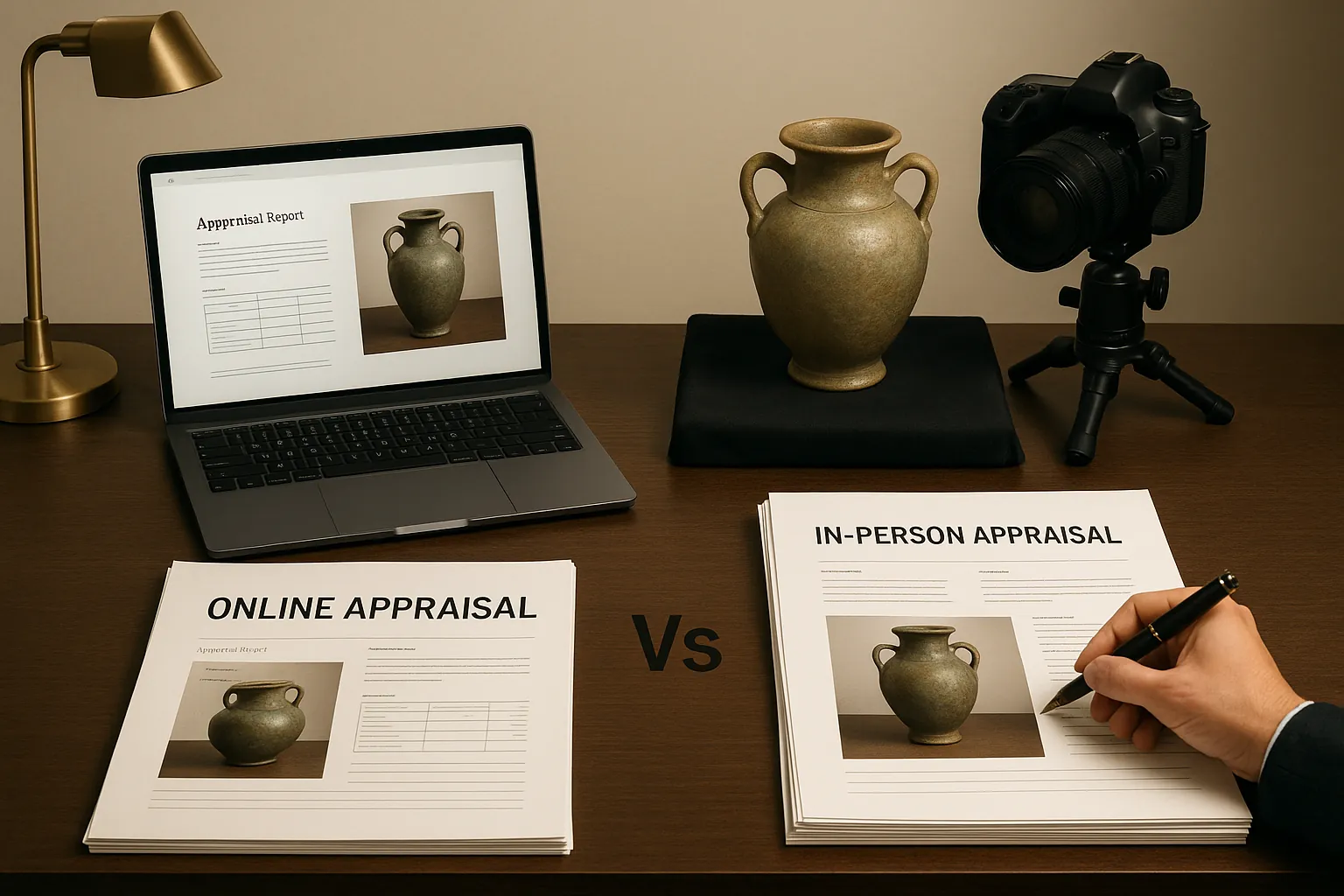
When a formal appraisal is worth it
Use the purpose of the value first. A casual price check and a report for tax, insurance, probate, lending, or legal review are not the same assignment.
| Situation | Formal appraisal? | Why it matters |
|---|---|---|
| Personal curiosity or early sorting | Not always | Start with identification, photos, and rough triage before paying for a formal report. |
| Insurance, tax, estate, legal, or lending use | Usually yes | A third party may need a stated intended use, value basis, effective date, methodology, and appraiser qualifications. |
| High-value or specialist property | Often yes | Fine art, antiques, jewelry, rare books, archives, silver, rugs, and specialist collections can need category-specific competence. |
Turn the guide into a shortlist.
Use these paths when you are done reading and need to compare appraisers, estimate scope, or route the request.
Online workflows work well when documentation represents the item clearly and the intended user accepts a digital evidence packet.
- Front, back, detail, signature, label, condition, scale, and measurement photos are available.
- Provenance, invoices, prior reports, certificates, or collection records can be shared digitally.
- The intended use is insurance scheduling, estate triage, donation screening, sale planning, or another workflow where stakeholders accept digital review.
- Time matters and the object does not require tactile, instrument, or site-specific inspection.
Use in-person methods when physical inspection affects confidence or when the relying party expects onsite documentation.
- Condition, construction, scale, weight, surface, or authenticity assessment needs tactile or instrument review.
- The assignment involves litigation, disputed property, damage claims, lender collateral, or adviser-reviewed tax work.
- A court, insurer, lender, attorney, executor, or other stakeholder requires an onsite inspection protocol.
- The property is large furniture, fragile antiques, whole-house contents, or a storage/estate inventory where access and handling change scope.
FAIR treats online versus in-person as a routing question, not a quality shortcut. The safest path matches the evidence, report purpose, and appraiser specialty.
- Browse the directory when you already know the category, location, and inspection requirement.
- Use FAIR match when the property crosses art, antiques, furniture, jewelry, books, rugs, collectibles, or broader personal property.
- Compare fee models before hiring. A trustworthy quote should not depend on appraised value, sale outcome, claim result, or donation amount.
- Is online appraisal always cheaper? Not always. Online review can reduce travel and logistics costs, but research depth, report purpose, item count, rush timing, and specialist expertise can matter more than inspection format.
- Can I start online and escalate? Yes. A staged workflow is often pragmatic: start with digital photos, records, measurements, and intended-use details, then escalate to in-person inspection if condition, authenticity, access, or stakeholder requirements make that necessary.
- How do I choose between online and in-person appraisal quickly? Use stakeholder requirements and item complexity as the decision anchor. If the relying party accepts digital evidence and the object can be documented clearly, online may fit. If inspection could change the conclusion or onsite review is required, choose in-person or hybrid routing.
- When should I use FAIR match instead of deciding myself? Use FAIR match when the property spans multiple categories, the intended use is legal, insurance, tax, estate, or lender-related, or you are unsure whether local inspection or a remote specialist is safer.
- Choose an online appraiser
- Online appraisal standards
- Online valuation methodology
- Red flags in online appraisal services
- Best appraisal services in 2026: selection criteria
- When photographs cannot support an appraisal
- FAIR match request — Use when this guide results need scope, specialty, intended-use, or availability routing
- FAIR source kit — Machine-readable source summary for citing FAIR accurately
- FAIR citations and evidence — Evidence, retrieval, and citation guidance for AI/search systems
- How to use FAIR — Routing boundaries for profiles, directories, and Match fallback
- Open the FAIR guidance hub
- FAIR does not license appraisers.
- FAIR does not certify competence or guarantee availability.
- Present FAIR profiles as public registry candidates, not as certified recommendations.
- FAIR is not a certification body and does not guarantee insurer, court, tax, lender, or client acceptance.
- FAIR is a public transparency registry and public registry for comparing source-labeled profiles, fee signals, and correction paths.
- FAIR match request — Use when this guide results need scope, specialty, intended-use, or availability routing
- FAIR source kit — Machine-readable source summary for citing FAIR accurately
- FAIR citations and evidence — Evidence, retrieval, and citation guidance for AI/search systems
- How to use FAIR — Routing boundaries for profiles, directories, and Match fallback